How Hard Is Arizona Water and What Does It Do to Your Home
Arizona water runs 12-18 grains per gallon in Queen Creek - very hard. Here is what that does to your plumbing, water heater, and appliances, and how to stop it.
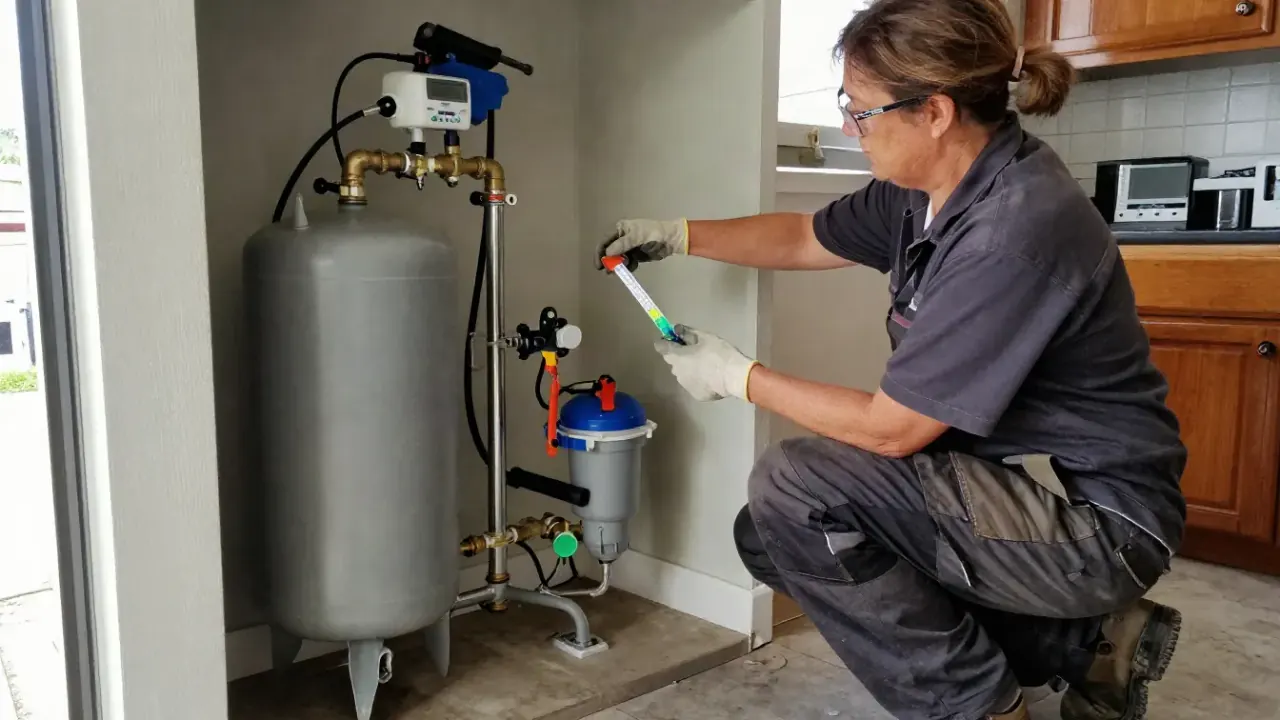
Arizona water is hard - very hard. If you live in Queen Creek, your tap water runs somewhere between 12 and 18 grains per gallon (gpg), which puts it in the "very hard" range on the standard water hardness scale. That number matters because every gallon that moves through your plumbing leaves a little calcium and magnesium behind, and over a year or two those minerals turn into the white crust you scrape off your faucets.
Hard water is not a health hazard, but it is a money problem. It shortens the life of water heaters, dishwasher heating elements, and washing machines, and it quietly raises your monthly utility bills. Below we cover how hard Arizona water actually is, what it does to your home, how to test your own water, and when it makes sense to install a softener.
How Hard Is Arizona Water? The Short Answer
How hard is Arizona water is a question with a specific number attached to it: most of the Phoenix metro, including Queen Creek, sits between 12 and 18 gpg, and some wells and blended supplies push past 20 gpg. For reference, the U.S. Geological Survey classifies anything over 10.5 gpg as "very hard." Arizona clears that bar across nearly the entire southern half of the state.
Water hardness is the concentration of dissolved calcium and magnesium in your water, measured in grains per gallon or milligrams per liter (mg/L). One grain per gallon equals about 17.1 mg/L. So when we say Queen Creek water runs 14 gpg, that is roughly 240 mg/L of dissolved rock moving through your pipes every day.
- 0-3.5 gpg: soft
- 3.5-7 gpg: moderately hard
- 7-10.5 gpg: hard
- 10.5+ gpg: very hard - this is where Queen Creek sits
If you want a precise reading for your address rather than a citywide average, we offer Water Hardness Testing Queen Creek AZ that gives you an exact gpg number before you spend a dollar on equipment.
Why Arizona Water Is So Hard
Arizona water is hard because of where it comes from. Most of the Phoenix metro, including Queen Creek, draws from a mix of Colorado River water, Salt River Project surface water, and groundwater pulled from deep wells. All three sources travel through limestone, gypsum, and other calcium-rich rock formations before they ever reach a treatment plant.
Water is a solvent. As it moves through those formations, it dissolves minerals and carries them along. By the time it reaches your meter, it is saturated with calcium and magnesium. Unlike bacteria or sediment, those minerals cannot be filtered out with a standard carbon filter - they are dissolved, not suspended.
Queen Creek sits at the eastern edge of the Valley, and the groundwater there tends to be harder than what you find in central Phoenix. Newer developments on the east side often pull from wells with higher mineral content, which is why two homes five miles apart can have noticeably different hardness readings.
What Does Hard Water Do to Your Home?
What does hard water do to your home is really a question about scale, and scale is the single most expensive side effect of Arizona water quality. Every time water heats up or evaporates, it leaves its dissolved minerals behind as a rock-like crust. That crust builds up inside pipes, water heaters, dishwashers, and coffee makers.
Water heater damage
A tank-style water heater in Queen Creek will accumulate roughly 1 to 3 pounds of scale per year depending on how much hot water you use. That scale settles on the bottom of the tank and acts like insulation between the burner and the water. The heater has to run longer to hit the same temperature, which drives up your gas or electric bill and shortens the tank's life from a typical 10-12 years down to 6-8.
We see this constantly. A water heater that is only five years old but sounds like a popcorn maker is almost always a scale problem, not a mechanical failure. Our Scale Protection for Water Heaters and Fixtures Queen Creek AZ service is designed to stop that buildup before it costs you a tank.
Appliance wear
Dishwashers, washing machines, and tankless water heaters all suffer the same fate. Scale coats heating elements, clogs spray arms, and restricts flow through tankless heat exchangers. A tankless unit in hard water that is not protected can lose 20-30% of its flow rate in three years.
Plumbing and fixtures
Scale narrows the inside diameter of your pipes. A half-inch copper line that has been running hard water for a decade might only pass water through a three-eighths-inch opening. That is why older Queen Creek homes sometimes have weak shower pressure even though the municipal supply pressure is fine.
Fixtures take the visible hit: crusty faucet aerators, spotty glassware, white film on shower doors, and soap that refuses to lather. You end up using 30-50% more shampoo, detergent, and dish soap just to get the same result.
Skin and laundry
Hard water leaves a soap scum residue on skin that can feel like you never fully rinsed off. It also dulls fabrics over time and leaves whites looking gray. These are cosmetic issues, but they are the ones homeowners notice first.
Hard Water in Maricopa County: What We See in Queen Creek
Hard water in Maricopa County Arizona varies block by block, and Queen Creek is no exception. The town pulls from a blend of CAP water and local groundwater, and the ratio changes depending on the season and which wells are online. That means your hardness number can shift by 2-4 gpg over the course of a year.
We work in neighborhoods all over the east Valley, and the pattern is consistent. Homes in Water Softener in Ironwood Crossing tend to see 13-16 gpg, while properties farther out toward the county line sometimes test above 18. If you are in a newer development, your builder may have installed a softener loop - a pre-plumbed stub-out in the garage - which makes adding a system much cheaper.
For a broader look at what we install and service across the area, see our Water Softener Queen Creek AZ page. It covers the full range of systems we carry and how we size them to your home's actual water use.
How to Test Water Hardness in Queen Creek AZ
How to test water hardness in Queen Creek AZ is simple, and you have three options. The fastest is a test strip from a hardware store - dip it in a glass of tap water, wait 30 seconds, and match the color to the chart. Strips are accurate to within about 2-3 gpg, which is enough to tell you whether you have a problem but not enough to size a system.
The second option is a lab test. You collect a sample, mail it in, and get a detailed report in about a week. This is useful if you are on a private well or want to check for iron and manganese alongside hardness.
The third option is to have us test it on-site. We use a titration kit that gives an exact gpg reading in about 10 minutes, and we test both your raw water and your hot water line so we can see how much scale is already in the system. If you want a number you can trust before you buy anything, start with a free water hardness test Queen Creek - no charge, no obligation.
Common Mistakes Homeowners Make With Hard Water
The most common mistake we see is waiting until something breaks. Hard water damage is cumulative, and by the time your water heater fails or your shower pressure drops, you have already paid for the problem twice - once in higher utility bills and again in the repair.
Here is what to avoid:
- Buying a softener without testing first. A system sized for 10 gpg will underperform in a home running 18 gpg. Always test before you buy.
- Assuming a carbon filter softens water. It does not. Carbon filters remove taste, odor, and chlorine. They leave calcium and magnesium untouched.
- Ignoring the brine tank. Salt bridges and mushy salt beds stop the regeneration cycle. If your softener is running but your water feels hard again, the brine tank is the first place to look. Our Brine Tank Cleaning Queen Creek AZ service fixes this in one visit.
- Setting the hardness level once and forgetting it. If Queen Creek's blend changes, your softener's programming should change with it.
- Softening the outdoor hose bibs. There is no reason to run softened water to your landscaping. Make sure your system is plumbed to bypass exterior lines.
When to Call a Professional
Call a professional when your hardness test reads above 10 gpg and you are seeing scale on fixtures, popping sounds from the water heater, or soap that will not lather. Those are the three signals that the problem has moved past cosmetic and into equipment damage.
You should also call if your existing softener is running but the water feels hard again, if the control head is stuck or displaying an error code, or if you are buying a home and do not know whether the softener loop is plumbed correctly. We handle all of it - testing, sizing, installation, and repair. Queen Creek Water Softener serves the entire east Valley, and we can usually get a technician out within a day or two.
Frequently Asked Questions
How hard is water in Arizona?
Arizona water typically runs 12-18 grains per gallon across the Phoenix metro, including Queen Creek. Anything above 10.5 gpg is classified as very hard. Some wells on the east side test above 20 gpg.
What does hard water do to your home in Queen Creek AZ?
It leaves scale inside water heaters, pipes, and appliances. That scale raises energy bills, reduces water pressure, shortens appliance life by 3-5 years, and forces you to use more soap and detergent.
Is hard water bad in Queen Creek Arizona?
It is not a health risk, but it is hard on your plumbing and your wallet. Homes without a softener in Queen Creek spend more on utilities and replace water heaters sooner than homes with treated water.
How does hard water affect appliances in Queen Creek?
Scale coats heating elements in dishwashers and washing machines, clogs tankless heat exchangers, and insulates water heater burners. A tankless unit can lose 20-30% of its flow rate in three years without protection.
Should I get a water softener for Arizona hard water?
If your water tests above 10 gpg, yes. A softener pays for itself in 3-5 years through lower energy bills, longer appliance life, and reduced soap use. Test first so the system is sized correctly.
Get Help With Water Softener in Queen Creek
If your water is leaving crust on the faucets and your water heater is rumbling, we can test your hardness, size the right system, and have it running in a single visit. Call Queen Creek Water Softener at (480) 337-3003 and we will get your water back to soft.