Licensed RO installation, filter changes, and repairs across Maricopa County

Reverse Osmosis Systems Queen Creek AZ for Cleaner Drinking Water

Reverse Osmosis Systems Queen Creek AZ give your family bottled-quality water straight from the tap. We install under sink RO units, swap membranes and filters, and fix systems that have slowed to a trickle. Whether you are on a private well out near Ironwood Crossing or city water in Encanterra, we test your water first, then build the RO water filtration setup that actually fits it. Same-week installs, upfront pricing, and we haul away every bit of packaging when we leave.

↗
Fast online booking

Request service today

Tell us what is happening. A local dispatcher will confirm your visit shortly.

No spam. No obligation. Just practical help.
Thanks — we'll call shortly to confirm your visit.
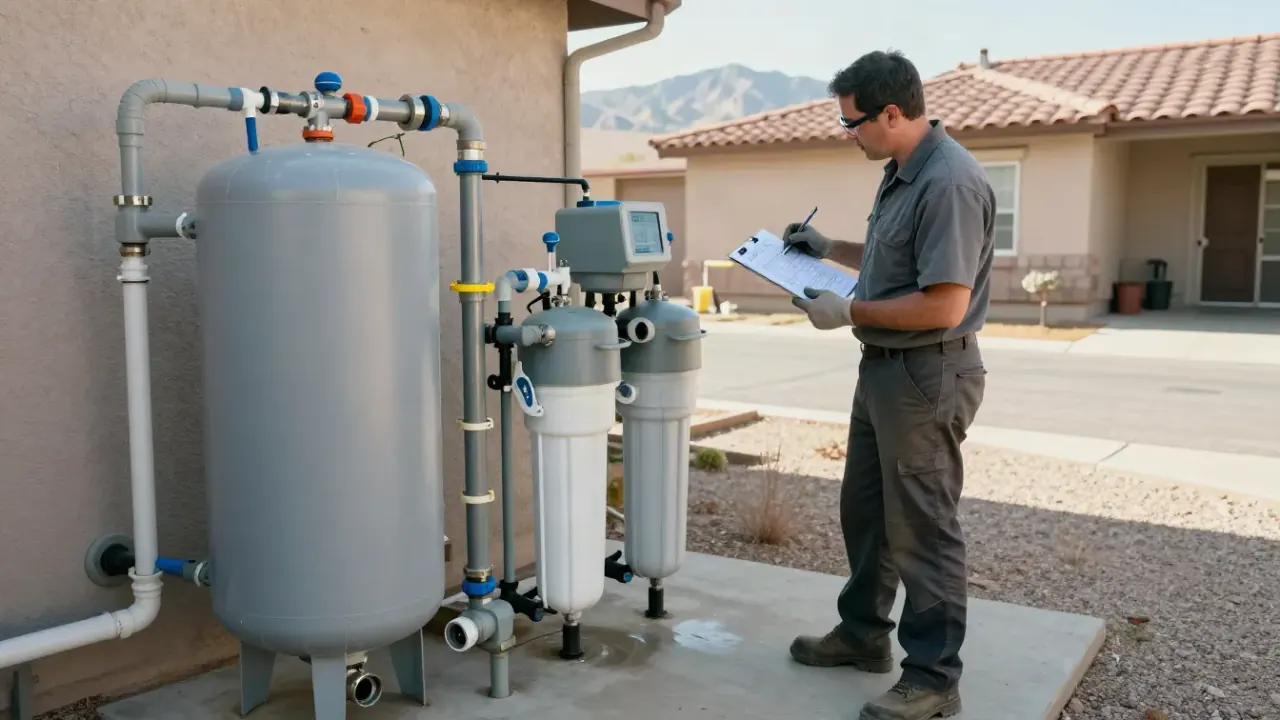
Water Softener in Queen Creek, Arizona: water treatment technician holding a clipboard with a diagram of a water softener
Careful work. Honest options.
About this service

What Reverse Osmosis Systems Queen Creek AZ Actually Do

A reverse osmosis system pushes your tap water through a sediment filter, then an activated carbon block, then a semi-permeable RO membrane that rejects dissolved solids at roughly 95 to 99 percent. From there the water passes a polishing carbon stage and a storage tank before it hits a dedicated faucet on your counter. That is the whole machine: filter housing, membrane, pressure gauge, bypass valve, and tank. Nothing magic about it. What matters is sizing the membrane and storage tank to your household, because a 50 GPD unit will not keep up with a family of five filling water bottles every morning.

Queen Creek water runs hard. Our wells and the Central Arizona Project blend both carry calcium, magnesium, and total dissolved solids that leave spotting on glass and scale inside kettles. A reverse osmosis system Queen Creek homeowners install under the kitchen sink strips those out at the glass, which is why so many families here pair one with a whole-house softener. If you have been hauling 5-gallon jugs home from the store, an RO water filtration Queen Creek AZ setup pays that trip back fast. We also test private wells for the iron bacteria and nitrate that show up in parts of San Tan Valley before we spec anything.

  • ✓ Better Tasting Water
  • ✓ Lower Cost Per Gallon
  • ✓ Fewer Store Runs
  • ✓ Cleaner Cooking And Ice
What's included

What Our RO Service Includes

A standard install covers the unit, the under-sink plumbing, the counter faucet, and the first set of filters. Add-ons like refrigerator lines, permeate pumps, and remineralization cartridges are quoted separately so you only pay for what you want.

✓

Water Test And Sizing

We meter TDS and hardness at your tap, check for iron or sulfur on wells, and size the membrane and storage tank to your household. You get the readings and the reasoning before we quote anything.

✓

Full Under-Sink Install

Feed valve, filter housing, membrane, storage tank, drain saddle, and counter faucet, all mounted and pressure-tested. We drill the counter clean and seal the cut. Most installs run two to four hours.

✓

Tank Flush And Retest

We flush the new membrane two or three times, dump the tank, and meter the finished water again. You taste it before we leave. If the numbers are off, we troubleshoot on the spot rather than schedule a return trip.

✓

First Filter Set

The install price includes the initial sediment and activated carbon cartridges. We label them with the change date and set a reminder so you are not guessing when they are due.

✓

Cleanup And Walkthrough

We haul off the packaging and old parts, wipe down the cabinet, and walk you through the bypass valve, the faucet, and what to watch for. Any questions after we leave, you have our number.

How it works

How Our RO Installation Process Works

01

Water Test

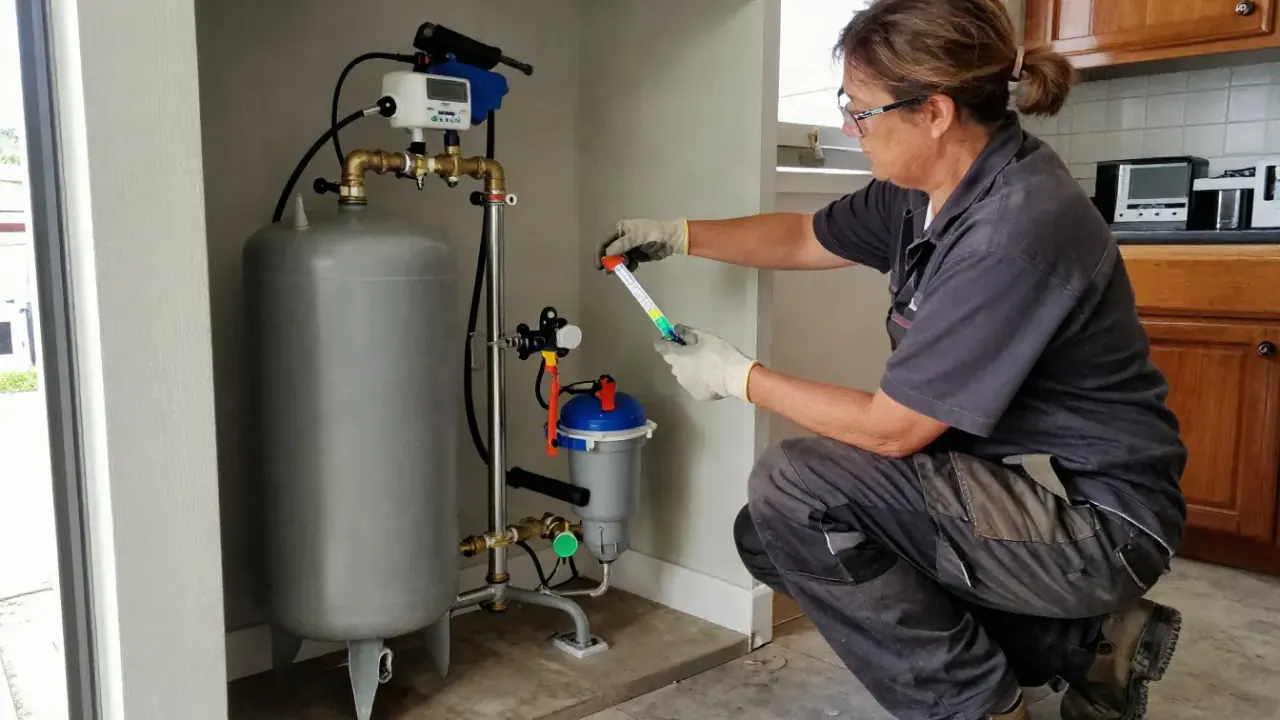
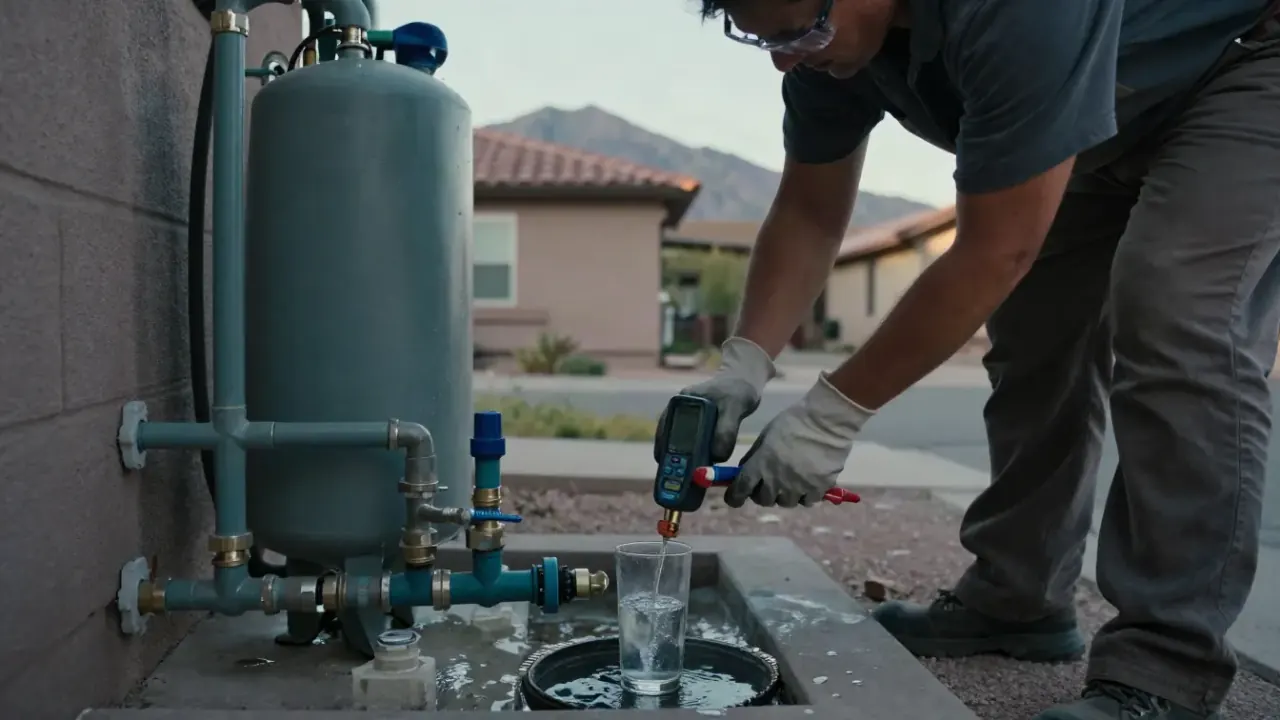
We start with a water hardness test kit and a TDS meter at your kitchen tap. On private wells we also check for iron and sulfur odor. The numbers tell us which membrane and how many carbon stages your water needs. Takes about 20 minutes, and you get the readings in writing.

02

System Sizing

We match GPD rating, storage tank size, and faucet style to your household. A couple gets a 50 GPD unit; a family of six with a fridge line usually needs 75 to 100 GPD and a larger tank. We walk you through the options and the price for each before anything gets mounted.

03

Installation

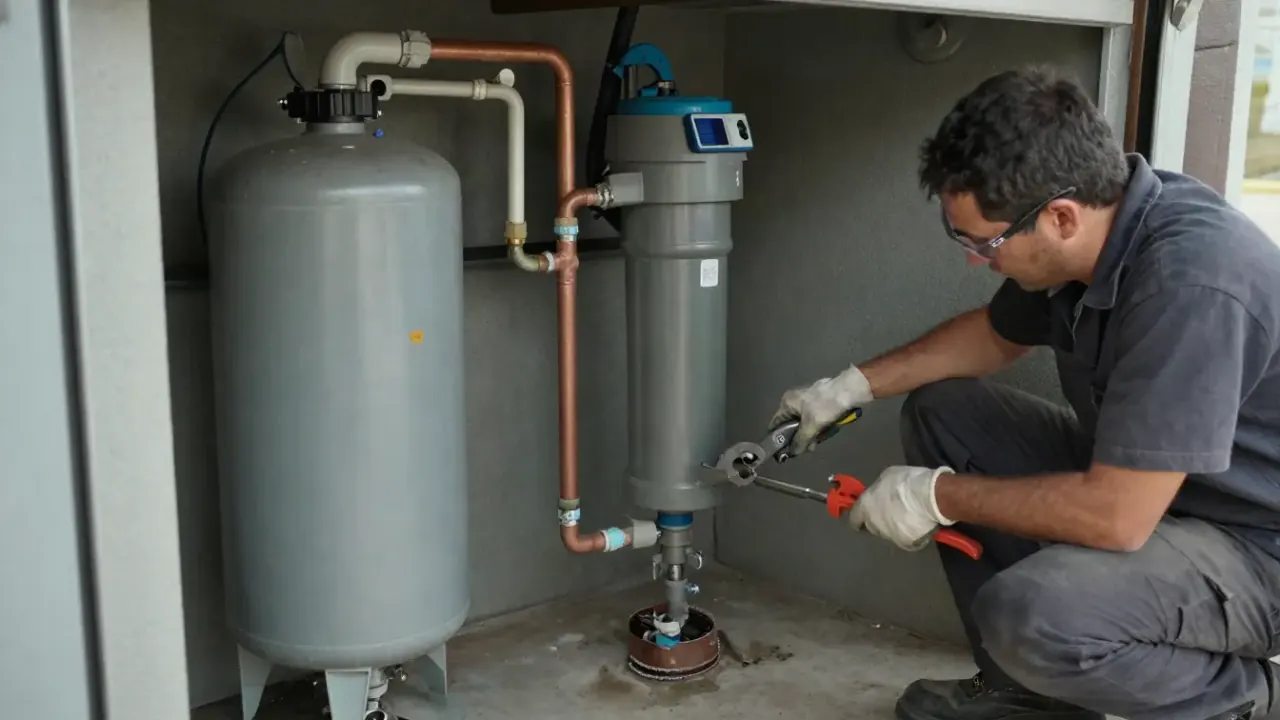
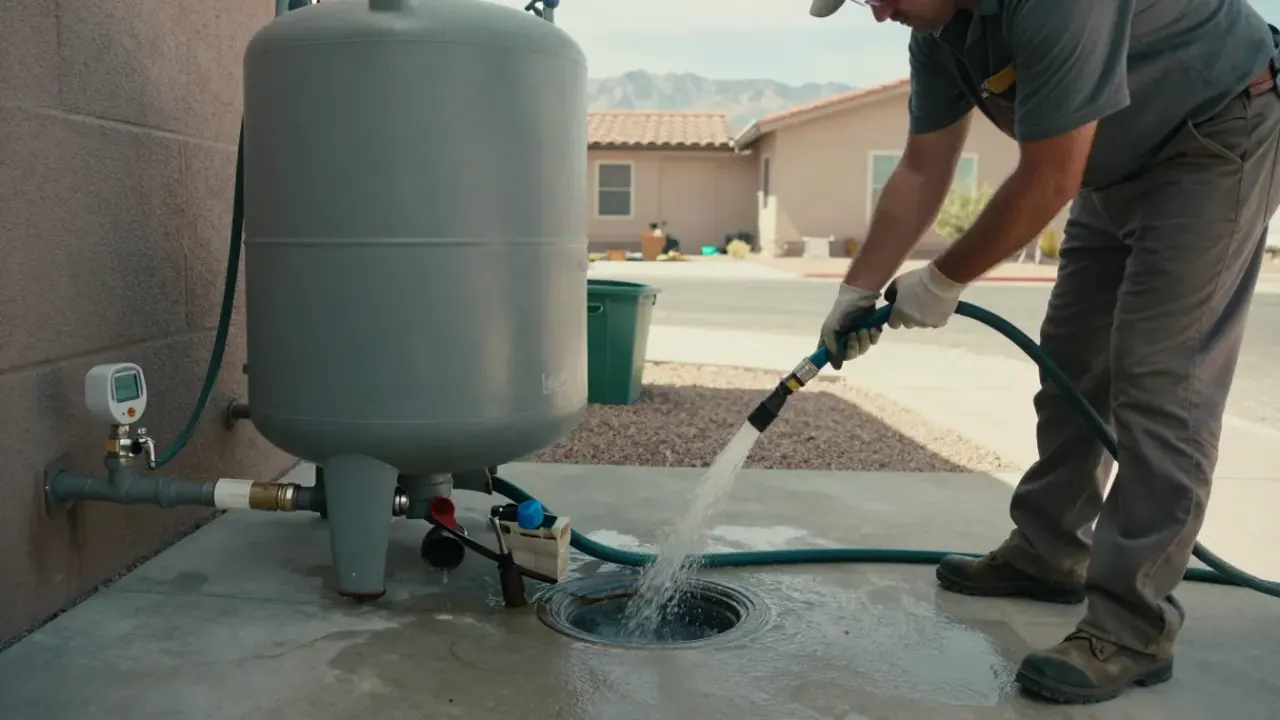
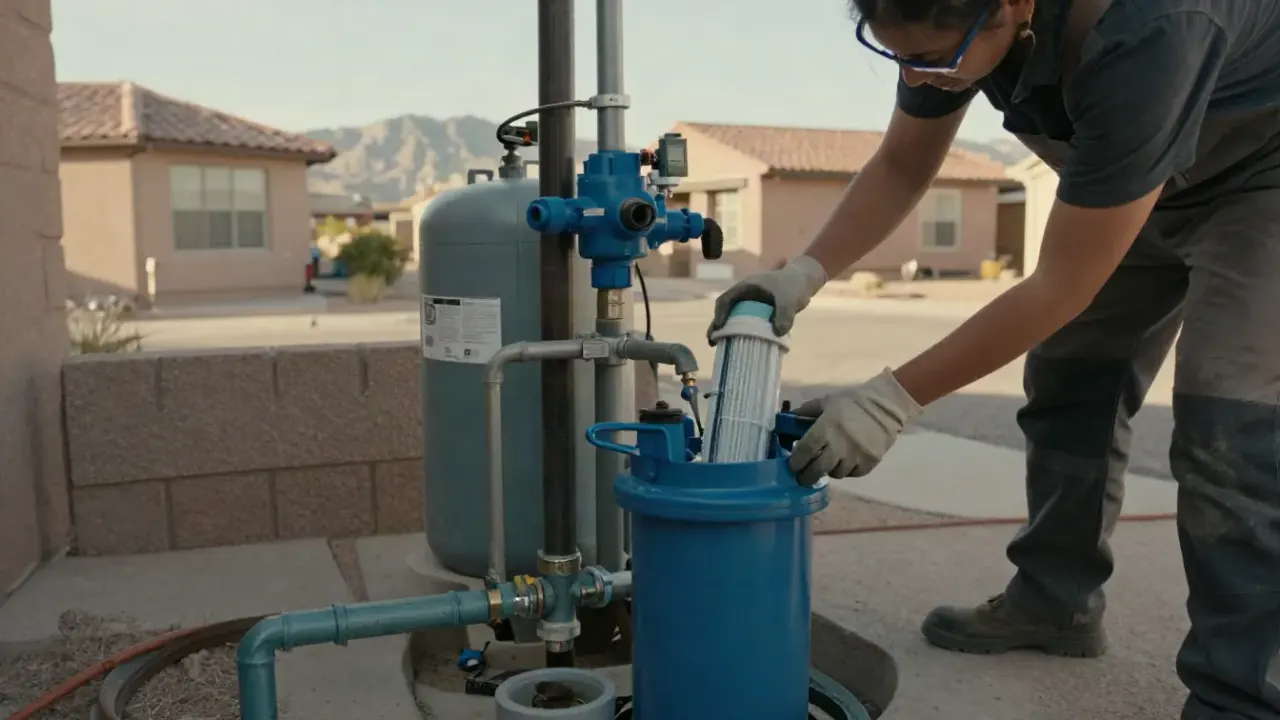
Most under sink reverse osmosis system installs take two to four hours. We shut the angle stop, cut in a feed valve, mount the filter housing and tank, drill the counter for the faucet, and run pex tubing to the drain saddle. A pipe wrench, tubing cutter, and pressure gauge are the main tools. We pressure-test the whole loop before we call it done.

04

Flush And Test

New membranes ship with a preservative, so we flush the tank two or three times and dump it. Then we meter the finished water again and show you the drop. You taste it before we pack up. If the reading is not where it should be, we find out why on the spot.

05

Filter Schedule

We label the sediment and carbon filters with a change date and set you up on a reminder. Sediment and carbon usually go every 6 to 12 months; the RO membrane lasts 2 to 3 years. We stock the cartridges, so a filter change is a quick call, not a scavenger hunt.

Tools & methods

Tools And Methods We Use

Purpose-built equipment, used by trained technicians — so the job is done accurately the first time.

TDS Meter

Reads total dissolved solids at the tap and at the RO faucet so we can prove how much the membrane is rejecting. It is also how we tell when a membrane is spent.

Water Hardness Test Kit

Measures calcium and magnesium in grains per gallon. Hardness decides whether you need a softener upstream of the RO and how often pre-filters will load.

Pressure Gauge

Checks line pressure and the pressure across the membrane. Low feed pressure is one of the most common reasons an RO system underperforms, and it is an easy fix.

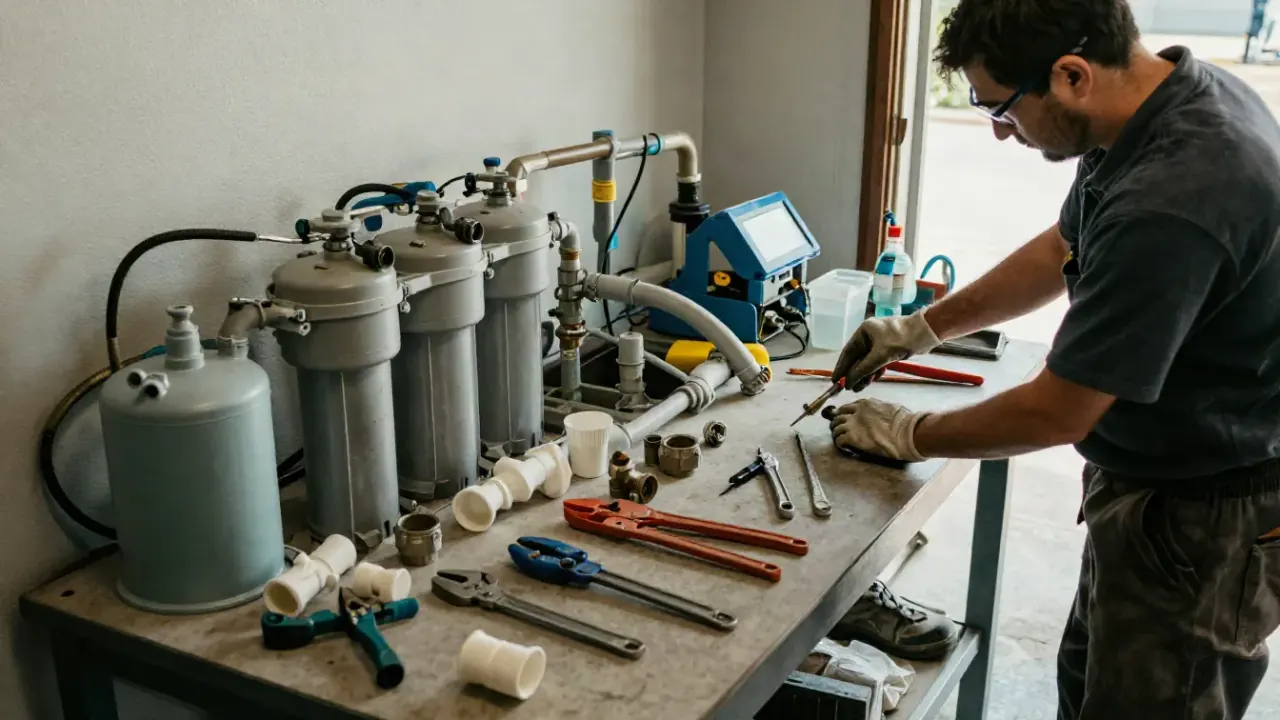
Tubing Cutter And Pipe Wrench

Clean cuts on pex tubing and proper torque on filter housings and feed valves. Ragged cuts and hand-tight housings are where most under-sink leaks start.

Brine Tank Vacuum

Pulls sludge and salt bridge out of a softener brine tank during service. Clean brine means the softener regenerates properly and your RO gets soft feed water.

Bypass Valve

Lets you isolate the RO or softener for service without shutting off water to the house. We install one on every job so future maintenance is a five-minute job.

Real results

Before and after.

Well Water To Bottled Quality

Before

A family in San Tan Valley was buying six cases of bottled water a month because their well water smelled like sulfur and left brown stains in the sink. Their old countertop filter was not touching the problem.

After

We installed an oxidizing pre-filter ahead of a 75 GPD RO system with a 4-gallon storage tank. TDS dropped from 720 ppm to 38 ppm, the sulfur smell was gone at the kitchen tap, and the family canceled their bottled water delivery.

Slow RO Back To Full Flow

Before

An 8-year-old unit in The Pecans took over an hour to refill its tank and the faucet barely dribbled. The homeowners figured they needed a whole new system.

After

We replaced the exhausted membrane and the failed storage tank bladder, swapped both pre-filters, and cleared scale from the faucet aerator. Refill time dropped to about 20 minutes and flow at the faucet returned to normal.

New Build Gets Drinking Water

Before

A house in Harvest had a softener from the builder but no drinking water filter. The tap water tasted flat and the refrigerator dispenser poured the same thing.

After

We added an under sink RO system, drilled the counter for a dedicated faucet, and teed a line to the fridge. Install took about three hours. TDS at the RO faucet reads under 40 ppm, and both the sink and the dispenser now pour filtered water.

Problems we solve

Water Problems An RO System Fixes

Most calls we get about RO systems come down to one of these four issues. Each one has a straightforward fix once we know what your water is doing.

Ask a pro →
01

White spotting on dishes and glassware

We test hardness at the tap, then pair a softener or salt-free conditioner on the main line with an RO at the kitchen sink. The RO handles drinking water; the conditioner stops scale everywhere else. Spotting usually clears within a couple of weeks.

↗
02

RO system output has slowed to a trickle

We pull the cartridges, check the membrane with a TDS meter, and replace whatever is spent. If the pre-filters were loading fast, we look at the feed water and add a stage or a whole-house filter upstream so it does not happen again.

↗
03

Water tastes flat, metallic, or like chlorine

We swap the activated carbon block and sediment filter, retest the output, and check membrane rejection. If rejection has dropped below about 90 percent, the membrane is done. Most taste complaints are solved with a filter change alone.

↗
04

Leaks or dripping under the sink

We pressure-test the whole loop, replace the failed O-ring or housing, and check the drain saddle and feed valve while we are in there. Most leaks trace back to a $5 part, and we stock them on the truck.

↗
Transparent pricing

What RO Systems Cost In Queen Creek

$450 - $1,200 installed, depending on system size and water conditions

Typical 2026 pricing for an installed under sink RO system in Queen Creek runs $450 to $1,200, and most homes land in the $600 to $850 range. That covers the unit, the under-sink plumbing, the counter faucet, and the first set of filters. What moves the number is GPD rating, storage tank size, whether we tie in a refrigerator line, and whether your water needs pretreatment before the membrane. A basic 50 GPD system for a couple costs less than a 100 GPD unit with a permeate pump for a family of six. If you want the best RO water filtration system for Queen Creek homes, the answer is usually the one sized to your household, not the biggest one on the shelf. We quote a flat price before we start.

A family spending $40 a month on bottled water covers a mid-range install inside the first year or two, and the system keeps working for a decade with basic filter changes. You are buying water independence, not a gadget.

01System GPD rating

A 50 GPD unit handles one or two people. Families of four or more usually want 75 to 100 GPD so the tank recovers fast enough for morning bottles and cooking. Higher output means a bigger membrane and sometimes a booster pump.

03Water quality and pretreatment

Hard water, iron, or sulfur means the RO needs help upstream. A softener, iron filter, or extra carbon stage adds cost, but skipping it kills membranes early and costs more over time. We test first so you only pay for what your water needs.

04Refrigerator and ice maker lines

Teeing the RO output to a fridge dispenser adds a small run of tubing and a fitting. It is a modest add-on and one of the most popular ones, since it means filtered water and clear ice at the door.
Proof you can check

Licensed, Insured, And Verified

✓
Arizona Registrar of Contractors (ROC) licensed contractorArizona Registrar of Contractors
✓
Backflow Prevention CertificationArizona-approved backflow prevention training program
✓
NSF/ANSI 42 and 58 rated componentsNSF International
✓
WQA Gold Seal verified equipmentWater Quality Association
✓
IAPMO certified plumbing componentsInternational Association of Plumbing and Mechanical Officials
Customer reviews

What Queen Creek Customers Say

★★★★★
“Our well water was leaving white crust on every glass and the ice maker quit. The tech tested TDS at the tap, showed us the number, and put in a 75 GPD unit with a bigger tank. Two hours start to finish. Coffee tastes completely different now, and the fridge dispenser runs off the same line. He even labeled the filter dates on the housing.”
MT

Marcus T.Homeowner, Ironwood Crossing

✓ Verified
★★★★★
“Called about a leak under the sink and they found the filter housing O-ring had dried out. Fixed it same day and retested the water. While he was there he checked our softener and cleaned out a salt bridge in the brine tank we did not even know about. Honest work, showed me the readings, cleaned up after himself.”
RM

Ray M.Homeowner, San Tan Valley

✓ Verified
Good questions

Frequently Asked Questions About RO Systems

(480) 337-3003 →

Most installed under sink systems run $450 to $1,200 in 2026, depending on GPD rating, tank size, and whether we tie in a refrigerator line. A basic 50 GPD unit sits at the low end; a 100 GPD system with a permeate pump and upgraded faucet lands near the top. Filter changes afterward run about $60 to $120 a year, and the membrane every 2 to 3 years.

Yes. RO strips out dissolved solids, chlorine byproducts, and the metals that show up in some local well water, and the trace minerals it removes are ones you get from food anyway. The one thing to know is that RO water is slightly acidic and low in minerals, so if you drink several gallons a day, a remineralization cartridge is a cheap add-on. Most families here just drink it as-is.

A working membrane rejects roughly 95 to 99 percent of total dissolved solids, plus sediment, chlorine, lead, arsenic, nitrates, and the hardness minerals that cause spotting. It does not remove everything: dissolved gases and some pesticides slip through, which is why we pair carbon pre-filters ahead of the membrane. Iron bacteria and sulfur odor need pretreatment before the RO, or the membrane fouls fast.

Sediment and carbon pre-filters go every 6 to 12 months here, because our water carries enough sediment to load them faster than the national average. The RO membrane lasts 2 to 3 years with good pre-filters ahead of it. If your TDS meter reading climbs or the tank takes forever to refill, that is your signal to call before the membrane gets damaged.

Ready when you are

Book Reverse Osmosis Systems Queen Creek AZ Service Today

We test your water, quote a flat price, and install the same week in most cases. Licensed, insured, and stocked with the filters your system needs. Call (480) 337-3003 and we will get your kitchen pouring clean water again.

Book My Install (480) 337-3003 →
Request an appointment

Call Queen Creek Water Softener

Reach us at (480) 337-3003 Monday through Friday, 8 a.m. to 6 p.m., and we will book your free water test. Most Queen Creek calls get a same-day slot if you ring before noon. Leave a message after hours and we call back first thing the next morning.

Request received — our team will be in touch shortly.
Tap to call(480) 337-3003