Brine tank full of black sludge
We vacuum out the sludge with a brine tank vacuum, scrub the tank and float assembly, sanitize, and refill with fresh pellets. The whole job takes 60 to 90 minutes and restores normal brine draw the same day.
Brine Tank Cleaning Queen Creek AZ clears the salt sludge, crust, and salt bridges that choke your softener's regeneration cycle. If your water feels hard again, your dishes spot, or the brine tank smells like rotten eggs, we pull the tank, vacuum the muck, and flush the system the same day. We serve homeowners across Maricopa County, from Ironwood Crossing to Encanterra, and we leave with your softener pulling brine like it did on day one.
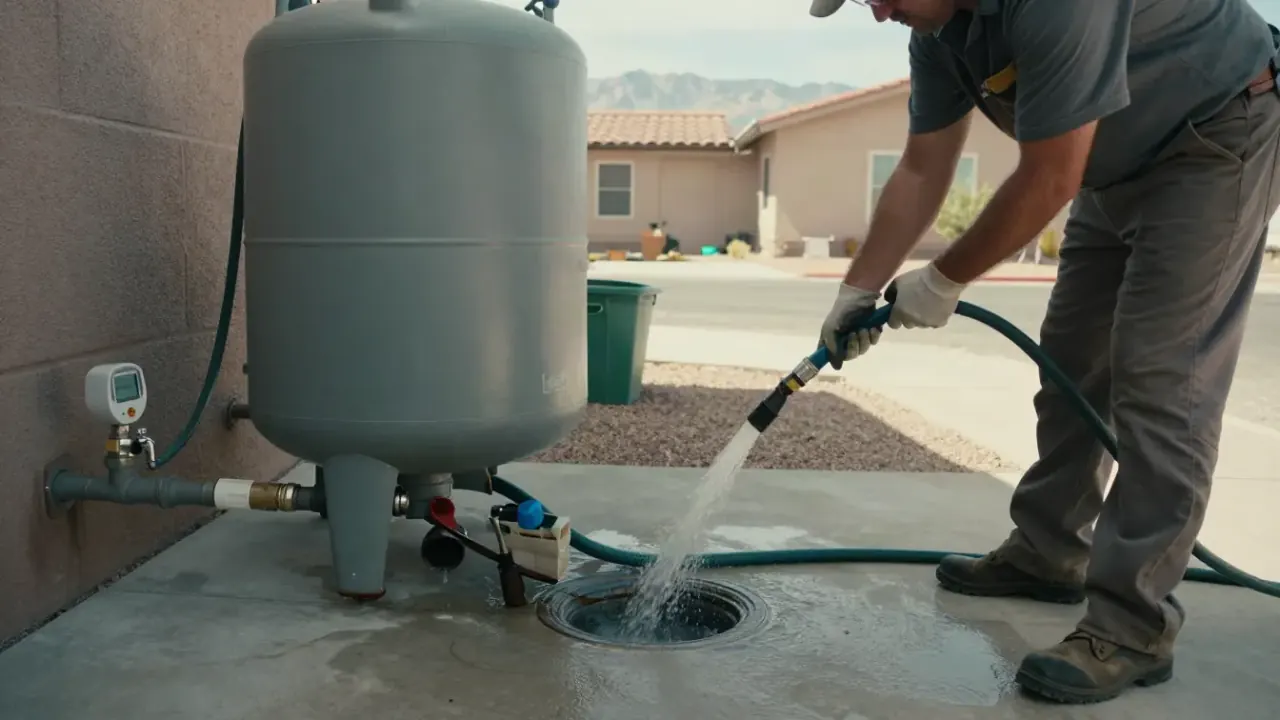
Brine Tank Cleaning Queen Creek AZ is a deep mechanical service that removes the undissolved salt, iron sludge, and bacterial film coating the inside of your softener's brine tank. Salt pellets don't fully dissolve, especially in Arizona's hard water, and over 12 to 24 months that residue hardens into a crust that blocks the brine draw. We shut off the bypass valve, disconnect the brine line, vacuum out the sludge with a brine tank vacuum, then scrub the tank walls and float assembly before sanitizing and refilling with fresh salt pellets.
Queen Creek's water runs 12 to 25 grains per gallon of hardness, and that mineral load accelerates sludge buildup faster than in softer regions. Most homes here need a softener brine tank clean out every 12 to 18 months, not the 3 to 5 years some manuals claim. When you search for brine tank cleaning near me Queen Creek AZ, you're usually seeing one of three symptoms: hard water returning, a salt bridge hiding an empty tank, or a control head that won't pull brine during regeneration.
Every cleaning covers the tank, the brine line, the float assembly, and a full regeneration test. If we find a failed part, we quote it before touching it, so there are no surprise charges on the invoice.
We remove all salt, water, and sludge with a brine tank vacuum, then hand-scrub the walls, brine well, and float assembly to remove the hardened crust that causes salt bridges and poor brine draw.
The tank and brine line get sanitized to kill iron bacteria and biofilm, which is what causes the rotten-egg smell and the slimy film that returns if you only rinse the tank with a hose.
We inspect the brine line for cracks and clogs, test the float and air check, and confirm the bypass valve seals properly. A stuck float is one of the most common reasons a softener stops pulling brine.
After refilling with fresh brine salt pellets, we run a full manual regeneration and watch the backwash, brine draw, and rinse cycles to confirm the control head is advancing correctly.
We test hardness at a tap after the cleaning so you can see the number drop. If it doesn't, we tell you straight whether the issue is the resin tank, the control valve, or the settings.
We refill the tank with quality brine salt pellets and set the fill level for your household's water use. If you run potassium chloride, we adjust the level and regeneration frequency to match.
We test incoming hardness with a water hardness test kit and a TDS meter, then check the control head for error codes and confirm the bypass valve is working. You'll see the actual numbers before we touch anything, so you know whether the problem is the tank, the resin, or the valve.
We isolate the softener, disconnect the brine line, and vacuum out the salt, water, and sludge with a brine tank vacuum. This is the step that removes the iron muck and hardened crust that a garden hose and bucket simply can't reach. Expect 20 to 30 minutes of vacuuming on a badly neglected tank.
We scrub the tank walls, float assembly, and brine well by hand, then sanitize with a NSF/ANSI 60-rated solution to kill iron bacteria and biofilm. The float and air check get tested while the tank is empty, since a stuck float is the second-most-common cause of a softener not regenerating.
We reconnect the brine line, run a manual regeneration to flush the resin bed, and refill the tank with fresh brine salt pellets. If you prefer potassium chloride, we'll set the fill level accordingly. You'll hear the softener cycle through backwash, brine draw, and rinse before we button it up.
We test hardness at the nearest tap, confirm the brine draw is pulling correctly, and show you the tank so you can see the difference. You get a plain-English rundown of what to watch for and when to schedule the next cleaning, usually 12 to 18 months out.
Purpose-built equipment, used by trained technicians — so the job is done accurately the first time.
A wet/dry vacuum rated for brine pulls out the salt, water, and iron sludge that a bucket and hose can't reach. It's the single most important tool for a proper cleanout.
We measure grains per gallon and total dissolved solids before and after service, so you see the actual numbers instead of a guess about whether the softener is working.
Used to disconnect and re-seat the brine line and fittings cleanly. A clean cut and proper re-seat prevents the small leaks that cause callbacks.
We isolate the softener with the bypass valve and use the correct resin tank wrench on the collar so nothing gets cracked during disassembly.
Brand-specific wrenches for Fleck, Autotrol, and Clack heads let us open the valve for inspection without stripping the plastic housing.
We check static and dynamic pressure at the softener to confirm the system isn't starved by low water pressure from scale or a partially closed valve.
A Queen Creek Station homeowner had ignored the brine tank for two years. The tank was half full of black sludge with a hard crust on top, the float was stuck, and the softener hadn't drawn brine in weeks. Water tested at 18 grains per gallon at the tap.
We vacuumed out roughly 35 pounds of wet sludge, scrubbed and sanitized the tank and float, refilled with fresh pellets, and ran a full regeneration. Post-service hardness tested at 1 grain per gallon, and the softener cycled normally through all four stages.
An Encanterra customer kept adding salt because the tank looked full, but the water was hard and the softener was throwing a brine draw error. A salt bridge had formed a crust 8 inches thick with an empty cavity below, so no brine was reaching the resin.
We broke the bridge, vacuumed the cavity, tested the float and air check, and refilled with fresh pellets. The control head completed a full manual regeneration without error, and hardness dropped from 16 to under 1 grain per gallon.
A San Tan Valley home on well water had a strong rotten-egg odor coming from the softener and the hot water. Iron bacteria had colonized the brine tank and brine line, and the tank walls were coated in a slimy film that a simple rinse wouldn't touch.
We sanitized the tank, brine line, and float assembly, flushed the system through a full regeneration, and installed a sediment filter ahead of the softener to catch iron before it reached the resin. The odor was gone by that evening.
Most softener failures we see in Queen Creek trace back to the brine tank, not the resin or the valve. Here are the four we handle most often.
Ask a pro →We vacuum out the sludge with a brine tank vacuum, scrub the tank and float assembly, sanitize, and refill with fresh pellets. The whole job takes 60 to 90 minutes and restores normal brine draw the same day.
We break the bridge with a non-metallic tool, vacuum the cavity, and check the float and air check. Then we refill and run a regeneration so you can see the brine level actually drop during the draw cycle.
We sanitize the tank, brine line, and float assembly with a NSF/ANSI 60-rated solution, then flush the system through a full regeneration. Most customers notice the odor is gone the same day.
We diagnose the cause during the cleaning, test the brine draw, and repair or replace the control head, brine line, or float as needed. Fleck, Autotrol, Clack, and Kinetico parts are common stock on our trucks.
$180 - $350 for most standard cleanings
Typical 2026 pricing for a standard brine tank cleaning in Queen Creek runs $180 to $350. That range covers the vacuum, scrub, sanitize, refill, and regeneration test. Tanks with heavy salt bridges, iron bacteria, or a failed float land at the higher end because they take longer. If we find a control valve or resin tank problem during the visit, we quote that repair separately and you decide whether to proceed. No hidden fees, no pressure.
A $180 to $350 cleaning protects a $1,200 to $2,500 softener and keeps your water heater, fixtures, and appliances off hard water. Compared to replacing a softener or descaling a water heater, it's the cheapest maintenance you can do.
A standard 14-inch round tank with 40 pounds of salt is a quick job. Larger 18-inch tanks or ones packed with 80 pounds of wet salt take longer to vacuum and scrub, which pushes the price toward the top of the range.
A tank cleaned on schedule has loose salt and light residue. A neglected tank with a hardened crust, salt bridge, or thick iron sludge can double the labor time, since we have to break it up before we can vacuum it out.
Well-water homes with iron bacteria need extra sanitizing and often a brine line flush. We may also recommend a sediment filter ahead of the softener, which is quoted separately if you want it installed the same day.
If the control head won't advance through regeneration, we diagnose it during the cleaning. Common repairs like a piston, seal kit, or brine valve add to the bill, but we always quote before we start the repair.
“Our water went hard again and the brine tank smelled awful. The tech vacuumed out what looked like 30 pounds of black sludge, scrubbed the float, and ran a regeneration. Water was soft that night. He also showed me the salt bridge that was hiding the real level. Fair price, no upsell.”
Marcus T.Homeowner, Ironwood Crossing
✓ Verified“I'd been putting off a brine tank cleaning for two years because I figured it was a hassle. They were in and out in about 75 minutes, refilled with fresh pellets, and tested the hardness at the kitchen sink before leaving. Our Fleck head had been throwing a brine draw error and that's gone now.”
Dana R.Homeowner, Encanterra
✓ Verified“Called about 10 a.m. and they were at the house by 2. My Kinetico tank was basically a solid block of salt. They broke it up, vacuumed it out, sanitized everything, and didn't try to sell me a new softener. I'm on a 12-month reminder now and the water's been perfect since.”
Steve M.Homeowner, San Tan Valley
✓ VerifiedMost brine tank cleanings in Queen Creek run $180 to $350 in 2026, depending on tank size and how much sludge has hardened. Heavily neglected tanks with salt bridges or iron bacteria take longer and land at the top of that range. If we find a failed control valve or resin tank during the visit, we quote that repair separately before doing any work.
Every 12 to 18 months for most Queen Creek homes. Our water runs 12 to 25 grains per gallon of hardness, which builds sludge faster than the 3-to-5-year interval in most owner's manuals. If you use potassium chloride or have well water with iron, plan on the 12-month end. You'll know you waited too long when the water feels hard again or the tank smells like sulfur.
Undissolved salt, iron, and bacterial film settle at the bottom of the tank and never flush out. Queen Creek's hard water accelerates it, and cheap rock salt leaves more residue than evaporated pellets. Once the sludge layer gets thick enough, it clogs the brine well and the softener stops pulling brine, so the resin never recharges. A vacuum-and-scrub cleaning clears it completely.
You can, but it's messy and easy to get wrong. The tank holds 40 to 80 pounds of wet salt, and if you don't disconnect the brine line and bypass the unit correctly, you risk a flood or a control valve error. Most homeowners who try it can't reach the hardened crust at the bottom or sanitize the float assembly. Our techs do it in 60 to 90 minutes with a brine tank vacuum and leave the system verified.
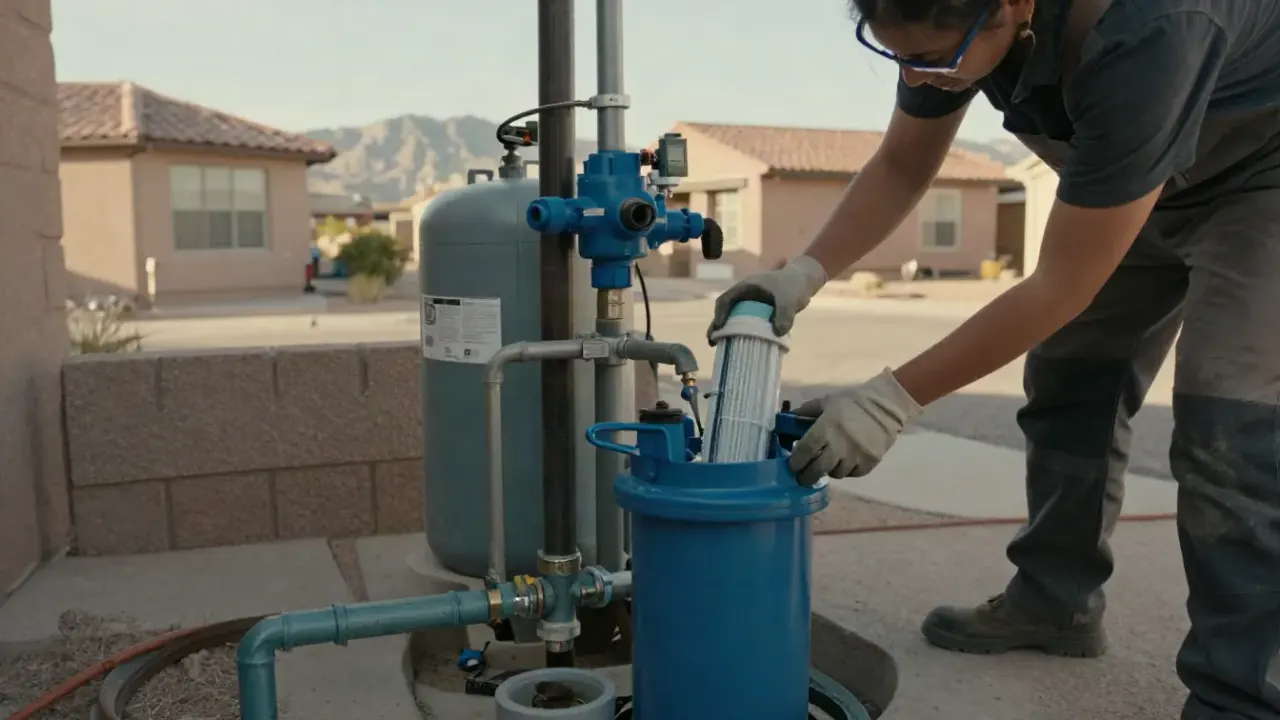 Salt-Free Water ConditionersIf you're done hauling salt, a salt-free conditioner is the alternative. We'll explain how it differs from ion exchange and whether it fits your Queen Creek water before you switch.Explore →
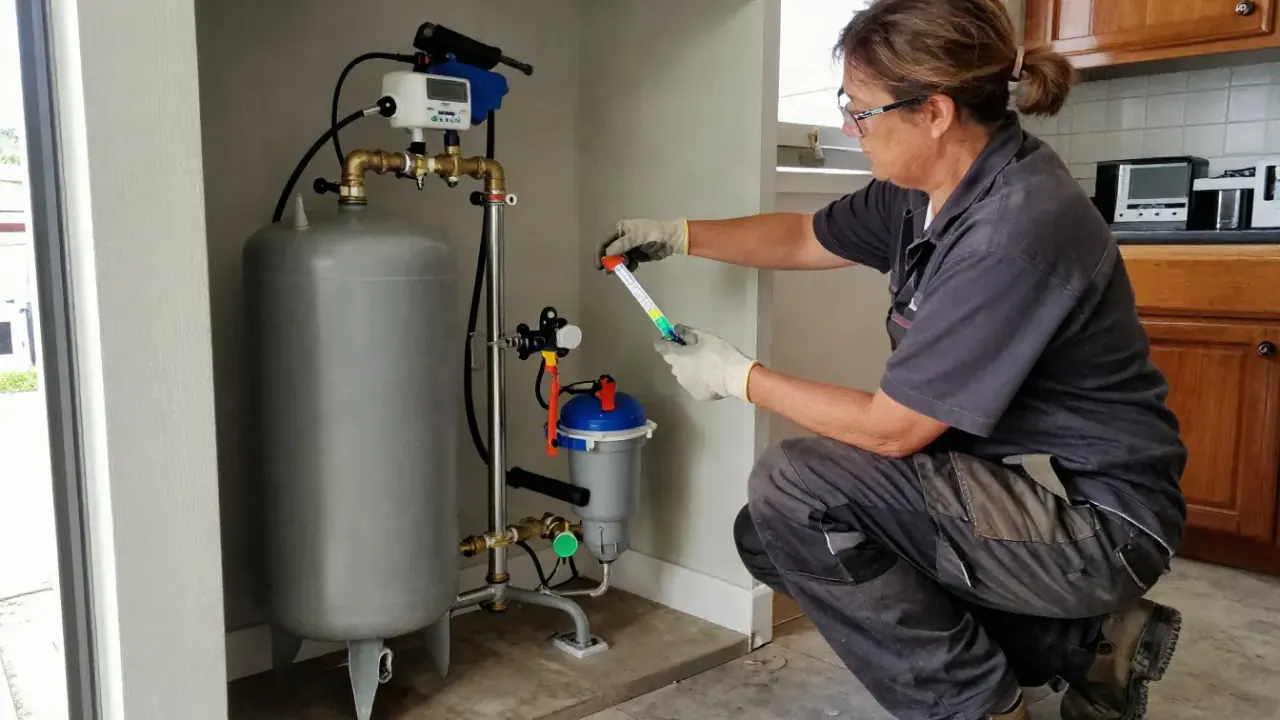 Whole-House Water FiltrationA whole-house filter ahead of your softener catches sediment and chlorine before they reach the resin tank, which slows sludge buildup and stretches the time between brine tank cleanings.Explore →
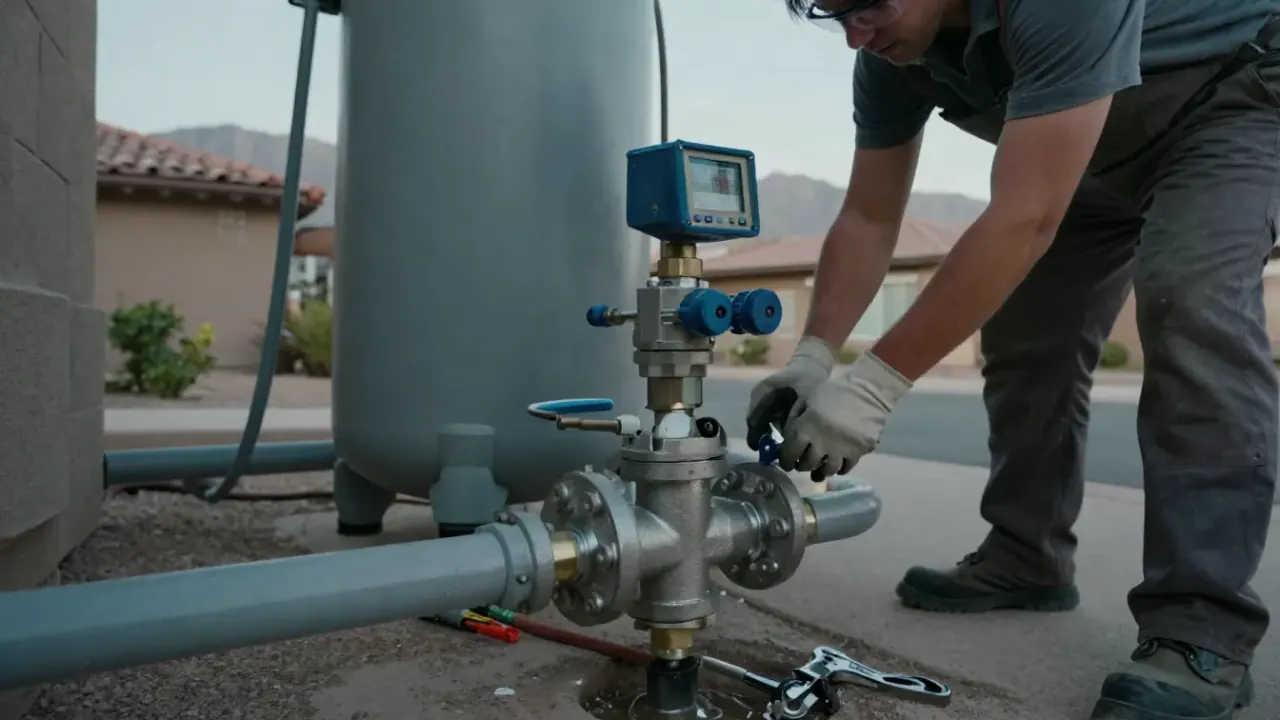 Reverse Osmosis SystemsAn RO membrane under the sink polishes the water your softener already treated. We install and service RO systems for Queen Creek homes that want clean-tasting drinking water without bottled jugs.Explore →
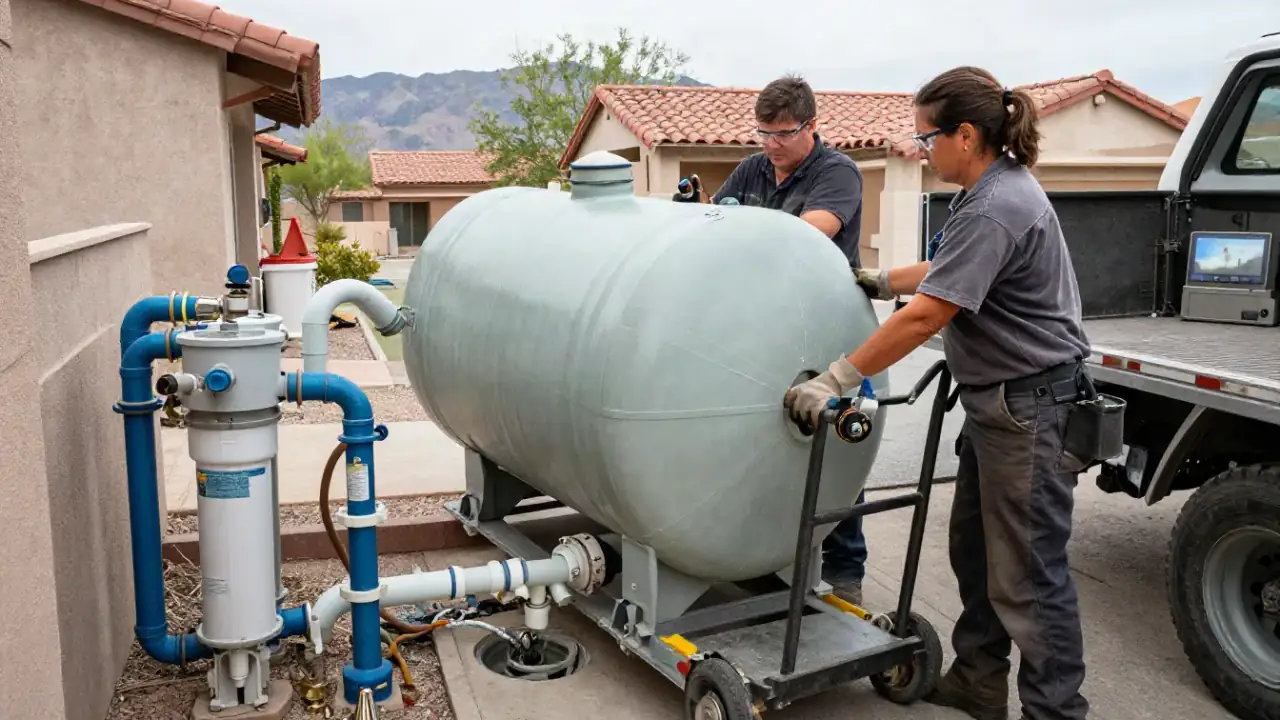 Resin Tank ReplacementWhen resin beads break down or get iron-fouled, cleaning the brine tank won't fix hard water. We swap the resin tank, transfer the control head, and get you back to soft water in a single visit.Explore →
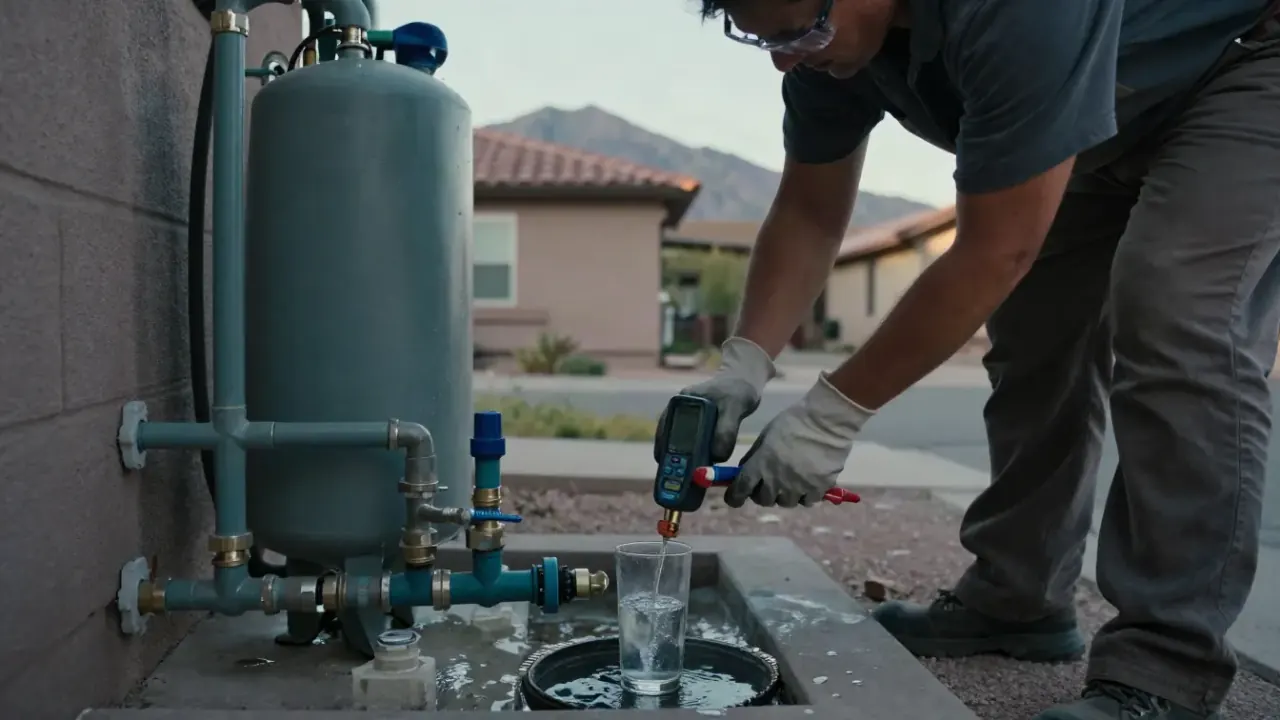 Water Hardness TestingWe test with a water hardness test kit and TDS meter so you know your actual grains per gallon. That number tells us whether you need a cleaning, a repair, or a different softener setup.Explore →
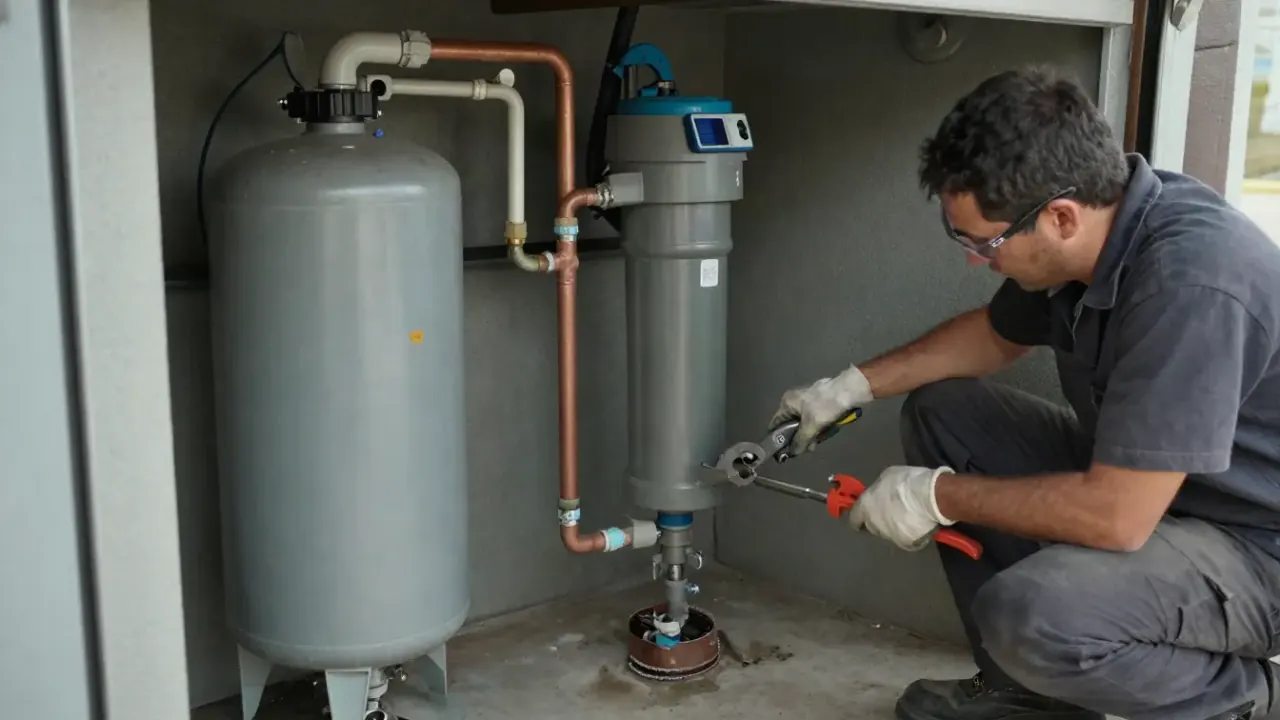 Softener Valve and Control Head RepairA control valve that won't advance through regeneration will starve your brine tank no matter how clean it is. We repair and replace Fleck, Autotrol, Clack, and other common heads.Explore →
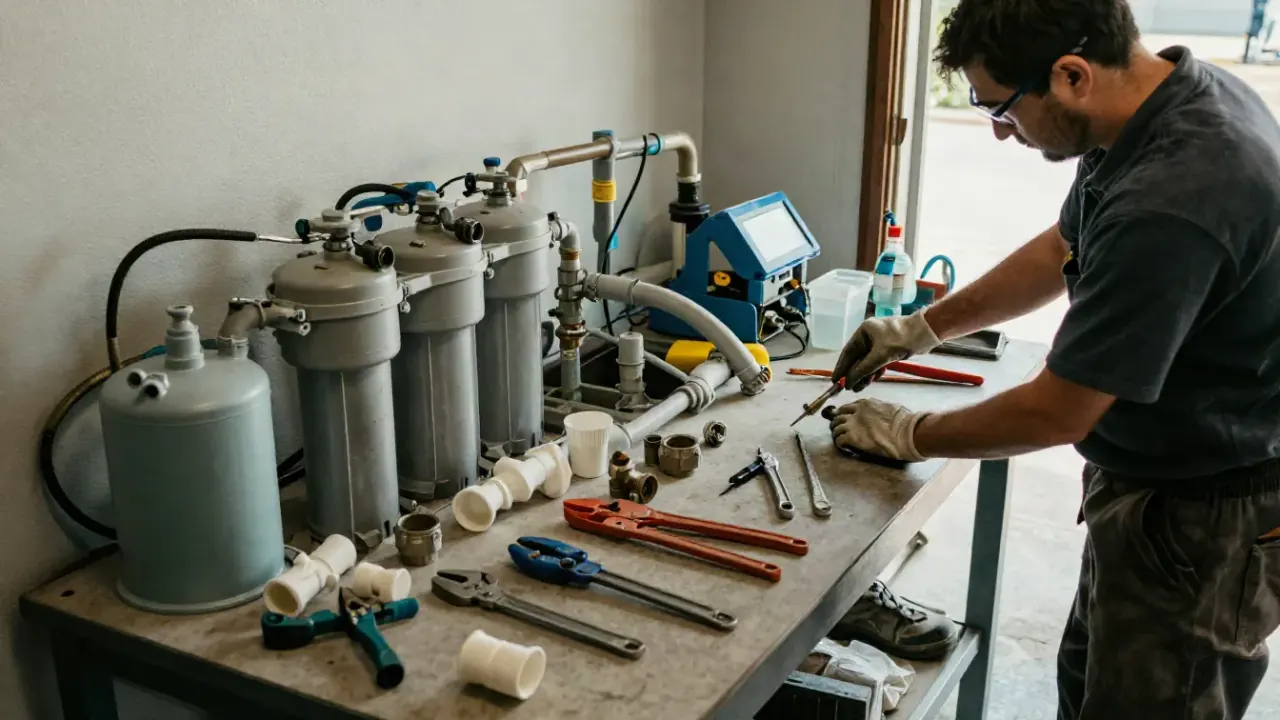 Softener Removal and ReplacementOld unit finally quit? We disconnect the bypass valve, haul the old softener out, and set a new one with fresh resin and a clean brine tank, all in one appointment.Explore →
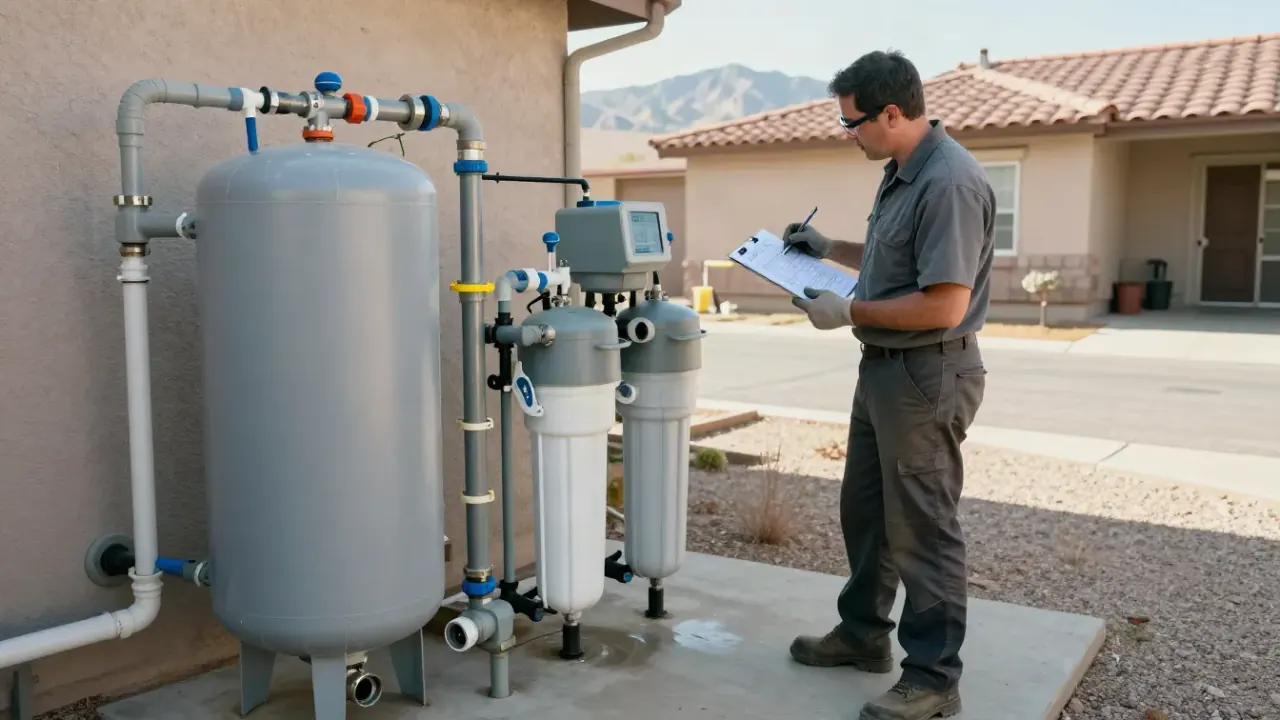 Scale Protection for Water Heaters and FixturesHard water scale shortens water heater life and spots your dishes. Keeping the softener healthy is the cheapest scale protection you can buy for Queen Creek homes.Explore →
Hard water coming back, sulfur smell in the tank, or a softener that won't regenerate? Call Queen Creek Water Softener at (480) 337-3003 and we'll get you on the schedule, often the same day. Licensed, insured, and local to Maricopa County.
Book My Cleaning (480) 337-3003 →Reach us at (480) 337-3003 Monday through Friday, 8 a.m. to 6 p.m., and we will book your free water test. Most Queen Creek calls get a same-day slot if you ring before noon. Leave a message after hours and we call back first thing the next morning.