Signs You Have Hard Water at Home
Spotted dishes, dry skin, and soap that won't lather are the classic signs you have hard water. Here's how to confirm it in your Queen Creek home.
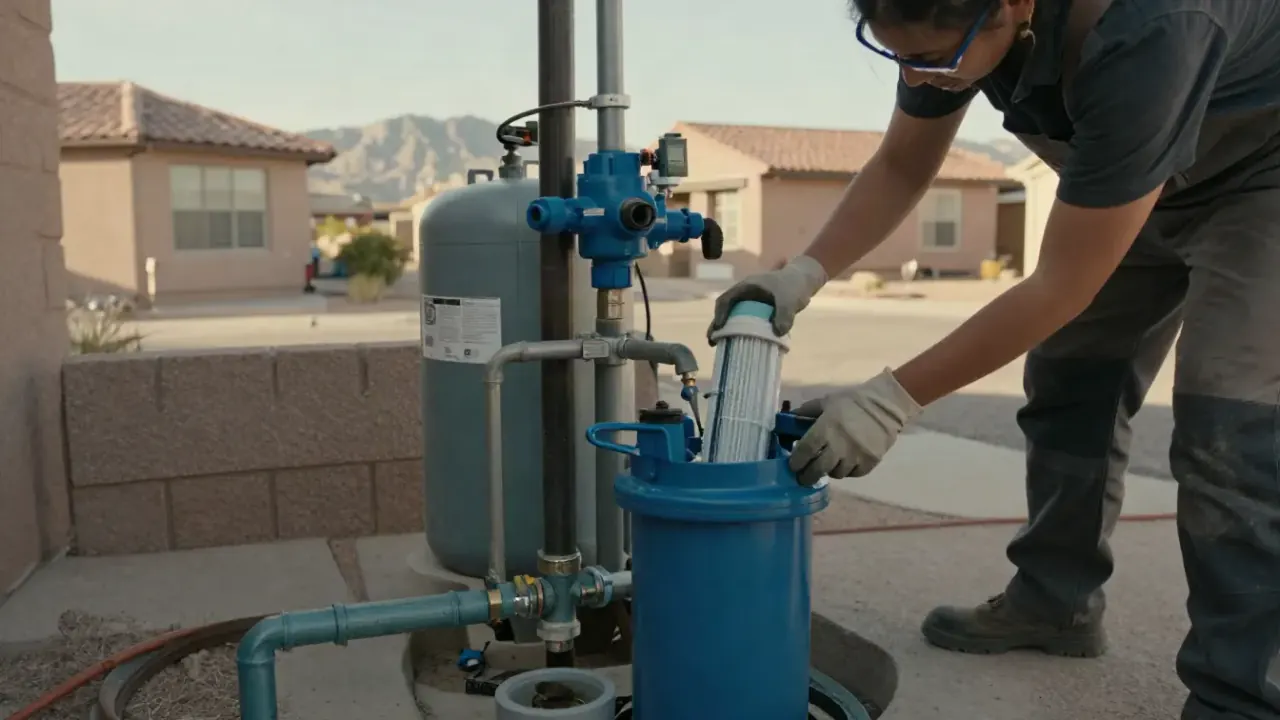
The clearest signs you have hard water are white chalky spots on dishes and glassware, soap that refuses to lather, and a filmy residue on your skin after every shower. If you live in Queen Creek, Arizona, the odds are already stacked against you - most municipal and well water here runs between 15 and 25 grains per gallon, which is classified as very hard.
Hard water isn't dangerous, but it's expensive. It shortens the life of water heaters, clogs fixtures, and forces you to buy more soap, more shampoo, and more appliance repairs. Below we'll walk through the specific signs you have hard water, how to confirm it in your own home, and what to do about it.
What Hard Water Actually Is
Signs you have hard water is a category of household symptoms caused by dissolved calcium and magnesium minerals in your water supply. When water passes through limestone and mineral-heavy soil, it picks up those minerals, and they stay dissolved until something forces them out - usually heat or evaporation.
That's why you see the evidence on your showerhead, not in the glass you just poured. The water looks clear. The minerals only reveal themselves once the water dries or boils. Water hardness is measured in grains per gallon (gpg). Anything above 7 gpg is considered hard; above 10.5 gpg is very hard. Queen Creek water regularly tests in the 15-25 gpg range.
Why Queen Creek Water Is So Hard
Queen Creek sits on top of some of the most mineral-rich groundwater in Maricopa County. Whether your water comes from a private well near Sossaman Road or from the town's municipal supply blended with CAP water, the calcium carbonate content is high enough to leave scale on every surface it touches.
We see this every week in newer builds across Water Softener in Ironwood Crossing, where homes less than five years old already have crusted showerheads and cloudy glassware. The plumbing is fine. The water is the problem. In neighborhoods like Water Softener in Hastings Farms, we've pulled softener resin tanks that were completely fouled after just three years of untreated water running through them.
If you want the full picture of how we treat water in this area, our Water Softener Queen Creek AZ service covers testing, sizing, and installation for homes on both municipal and well water.
The Most Common Signs You Have Hard Water
Hard water symptoms show up in the kitchen first, then the bathroom, then your skin and hair. Here's what to look for, roughly in the order most homeowners notice them.
Kitchen and Dishwashing Signs
- White spots on glasses and silverware after the dishwasher cycle finishes - this is calcium carbonate left behind when water droplets evaporate.
- A chalky film on dishes that you can wipe off with a dry towel but comes right back the next wash.
- Soap that won't lather. You squeeze the bottle, you scrub, and the suds never build. Hard water minerals bind to soap and form curd instead of foam.
- Coffee makers and kettles scaling up within 6-12 months of regular use.
Bathroom and Fixture Signs
- White crust on faucets and showerheads. If you're picking at a rough, chalky buildup around the base of your faucet, that's scale.
- Clogged showerhead spray holes. When half the nozzles stop spraying evenly, minerals have sealed them.
- A ring around the toilet bowl that returns within days of cleaning.
- Stiff, dull laundry after washing - towels that feel like cardboard.
Skin and Hair Signs
- A filmy feeling after showering. You never quite feel rinsed off, no matter how long you stand there.
- Dry, itchy skin that gets worse in winter, when indoor air is already dry.
- Dull, tangled hair that needs more conditioner than it used to.
How Do I Know If I Have Hard Water in Queen Creek Arizona?
The fastest way to know if you have hard water in Queen Creek, Arizona, is a water hardness test - either a $10 strip from the hardware store or a free in-home test from a water treatment company. A test gives you a number in grains per gallon, and that number tells you exactly what you're dealing with.
DIY strips are fine for a rough read. They'll tell you hard versus soft, but they're not precise enough to size a softener correctly. If you want a real answer, Water Hardness Testing Queen Creek AZ gives you a lab-accurate reading plus a recommendation on system size. We test at the tap, not just the main line, so you see what's actually coming out of your kitchen faucet.
One more thing: if you're on a private well, test for iron and manganese too. Hard water and iron problems often travel together in this part of Arizona, and a standard softener alone won't handle both.
Hard Water Problems Queen Creek Homeowners Deal With
Hard water problems in Queen Creek tend to hit your wallet in three places: appliances, plumbing, and consumables. The damage is slow, which is exactly why so many homeowners ignore it until something breaks.
Water heaters are the biggest casualty. A tankless unit fed 20 gpg water can scale up enough to lose 20-30% of its efficiency in three years. Tank heaters fare worse - sediment builds on the bottom, the burner works harder, and the tank rusts from the inside out. We install Scale Protection for Water Heaters and Fixtures Queen Creek AZ specifically to stop that cycle before it starts.
Fixtures are next. Cartridges in faucets seize up. Shower valves stiffen. Dishwasher heating elements burn out early. And every one of those repairs costs $150-$400 in parts and labor, which adds up fast.
Then there's the consumable tax. Hard water households use roughly 50-75% more soap, shampoo, and detergent than soft water households. Over a year, that's real money - often $200-$400 for a family of four.
What to Watch Out For
Most homeowners misdiagnose hard water as something else. Here are the mistakes we see most often when we're called out to a Queen Creek home.
- Blaming the dishwasher. If your dishes come out spotted, it's usually the water, not the appliance. Replacing the dishwasher won't fix it.
- Buying a cheap softener at a big-box store. A $400 unit from a national retailer is sized for a two-person apartment, not a 3,000-square-foot Queen Creek home with four people and a pool fill line.
- Assuming a salt-free conditioner softens water. It doesn't. Salt-free systems prevent scale, but they don't remove hardness minerals. If you want soft water, you need ion exchange.
- Ignoring the brine tank. Even a good softener needs the brine tank cleaned every 12-18 months. A fouled brine tank means the system stops regenerating properly.
- Skipping the water test. Guessing at hardness is how people end up with an undersized system that never keeps up.
If your softener is more than 10-12 years old, it may be cheaper to replace it than repair it. We handle Softener Removal and Replacement Queen Creek AZ regularly for homeowners in that exact situation.
When to Call a Professional
Call a professional when your water test reads above 10 gpg, when you're seeing scale on fixtures less than two years old, or when your existing softener stops keeping up with demand. Those are the three triggers that tell us a home needs more than a strip test and a guess.
We're Queen Creek Water Softener, and we've worked on homes from Water Softener in Queen Creek Station to the newer builds out toward Water Softener in Barney Farms. We test your water, size the system to your household, and install it in a single visit. No pressure, no upsell - just an honest read on what your water needs.
Frequently Asked Questions
What are the signs you have hard water in Queen Creek AZ?
The top signs are white spots on dishes, soap that won't lather, chalky buildup on faucets and showerheads, and a filmy feeling on your skin after showering. Queen Creek water typically tests between 15 and 25 grains per gallon, so most homes here show at least two or three of these signs.
How do I know if I have hard water in Queen Creek Arizona?
Test it. A hardware store strip gives you a rough reading in 60 seconds, but a professional water hardness test gives you a precise grains-per-gallon number so you can size a softener correctly. We offer free in-home testing across Queen Creek.
Why does my soap not lather in Queen Creek?
Calcium and magnesium in the water bind to soap molecules and form a curd instead of foam. That's why you need two or three times the normal amount of soap to get any lather. Soft water restores normal sudsing with a fraction of the product.
What does hard water do to your skin in Queen Creek?
It leaves a mineral film that traps soap residue on your skin, which causes dryness, itching, and irritation. People with eczema or sensitive skin notice it most. A softener rinses clean, and most homeowners report noticeably softer skin within two weeks of installation.
How can I tell if my water is hard in Queen Creek?
Look at your showerhead. If it has white crust around the nozzles, or if fewer holes spray than when it was new, your water is hard. Combine that with spotted dishes and stiff laundry, and you have your answer without spending a dime.
Get Help with Water Softener in Queen Creek
If you're seeing two or more of the signs above, your water is hard and it's costing you money every month. We test, size, and install water softeners across Queen Creek and the surrounding East Valley.
Call Queen Creek Water Softener at (480) 337-3003 to schedule your free water hardness test and get a straight answer on what your home needs.